Leather hard clay is a widely used material in pottery and sculpture. As the name suggests, it is a type of clay that has reached a state between wet and dry, where it is still pliable but has enough stiffness to maintain its shape. This intermediate stage is achieved by allowing the clay to dry slightly so that the surface is no longer tacky, but not so much that it becomes completely dry and brittle. Leather hard clay is a versatile material that opens up a range of possibilities for artists, allowing them to create intricate designs, textures, and finishes that would not be possible with wet clay. In this article, we will explore leather hard clay in detail, covering its composition, history, types, benefits, preparation, techniques, tools, texturing, decoration, firing, and environmental impact.
Understanding the Composition of Leather Hard Clay
Leather hard clay is typically made up of a combination of natural clays, minerals, and other organic materials, such as grog or sand. The exact composition of the clay will depend on the type of clay used, as well as any additives or pigments that have been added. Some common types of clay used for leather hard clay include earthenware, stoneware, and porcelain. Earthenware clays are more porous and have a lower firing temperature, making them ideal for decorative objects and tableware. Stoneware clays are stronger and more resilient, making them better suited for functional objects such as plates and cups. Porcelain clays are the most refined and delicate, often used for intricate sculptures and decorative objects where translucency is desired.
It is important to note that the process of creating leather hard clay involves a specific level of moisture content. The clay must be firm enough to hold its shape, but not so dry that it becomes brittle and cracks. This delicate balance is achieved through careful monitoring and manipulation of the clay during the drying process. Once the clay has reached the leather hard stage, it can be carved, trimmed, and refined before being fired in a kiln to achieve its final hardness and durability.
The History of Leather Hard Clay and Its Evolution Over Time
The use of clay for artistic purposes dates back to ancient civilizations such as the Egyptians and Greeks, who used the material for pottery and sculpture. The technique of achieving leather hard clay, however, is a more recent development. Early potters in China and Japan discovered that by allowing the clay to dry before working with it, they could create more detailed and intricate designs. Over time, the technique spread to Europe and the rest of the world. Today, leather hard clay is an essential material for ceramic artists around the globe.
One of the advantages of using leather hard clay is that it allows for more precise carving and shaping. When the clay is in this state, it is firm enough to hold its shape, but still soft enough to be carved or trimmed with tools. This makes it an ideal material for creating intricate designs and patterns.
Another benefit of leather hard clay is that it can be easily joined to other pieces of clay. This is because the surface of the clay is slightly porous, which allows it to bond with other pieces when water is applied. This makes it possible to create larger, more complex ceramic pieces, such as vases or sculptures, by joining multiple pieces of leather hard clay together.
Different Types of Leather Hard Clay: Which One to Choose?
As mentioned earlier, there are several types of clay that can be used to create leather hard clay, each with its own properties and characteristics. The choice of clay will depend on the specific project and the desired outcome. For example, if you are making decorative objects or sculptures, you may want to use a more pliable earthenware clay, while if you are making functional objects like cups or plates, you may opt for a stronger and more durable stoneware clay. It is essential to choose a clay that is compatible with the intended glaze or firing temperature, as some clays may not withstand high temperatures.
In addition to the type of clay, the moisture content of the clay also plays a crucial role in achieving the desired leather hard stage. If the clay is too dry, it will be difficult to shape and may crack, while if it is too wet, it will be too soft and may lose its shape. It is important to maintain the right moisture content by adding water or letting the clay dry out before shaping.
Another factor to consider when choosing the type of clay for leather hard stage is the color. Some clays have natural colors that can add to the aesthetic appeal of the final product, while others may require glazes or paints to achieve the desired color. It is important to consider the color of the clay and how it will complement the intended design or decoration.
The Benefits of Using Leather Hard Clay for Pottery and Sculpture
The most significant benefit of using leather hard clay for pottery and sculpture is the level of control it provides over the material. As the clay has a firmer structure than wet clay, it is easier to achieve more intricate designs and textures, as well as better control over the shape and size of the object. Leather hard clay also allows for easier handling during the decoration and glazing process, as the surface is less likely to be damaged. Another benefit of using leather hard clay is that it reduces the risk of warping and cracking during the firing process, which can be a common issue with wet clay.
How to Prepare and Store Leather Hard Clay for Optimal Results
Preparing leather hard clay is a relatively straightforward process. To achieve the correct level of moisture, the clay must be exposed to air for a sufficient amount of time until the surface is dry to the touch, but not completely dry. The clay can then be worked with using various techniques such as carving, molding, or throwing on a wheel. Leather hard clay should be stored in a damp environment, such as a sealed plastic bag, to prevent it from drying out completely. It is essential to keep the clay at the same moisture level throughout the entire project to achieve uniform results.
Techniques for Working with Leather Hard Clay: Tips and Tricks
There are several techniques that can be used when working with leather hard clay, each with its own specific benefits and challenges. Some common techniques include carving, incising, sgraffito, and modeling. Carving involves removing clay from the surface to create a design or pattern, while incising involves cutting into the surface to create lines or grooves. Sgraffito is a method where one layer of clay is removed to reveal a different colored clay underneath, while modeling involves adding or manipulating clay to create a three-dimensional form. It is essential to experiment with different techniques to find the ones that work best for your project and style.
Common Mistakes to Avoid When Working with Leather Hard Clay
There are several common mistakes that artists may encounter when working with leather hard clay, such as allowing the clay to dry out too much or not storing it correctly. Other mistakes may include not properly supporting the clay during the building process, or not taking into account the shrinkage that occurs during firing. It is important to be mindful of these mistakes and take steps to avoid them to achieve the best possible results.
Tools You Need to Work with Leather Hard Clay: A Comprehensive Guide
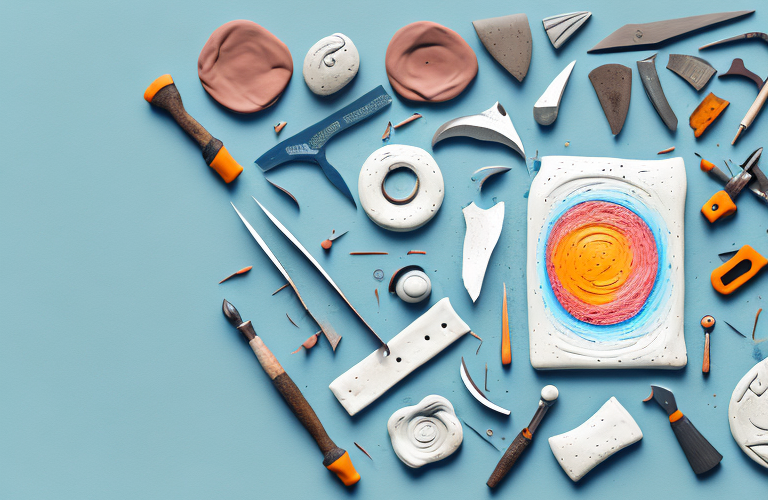
Working with leather hard clay requires a range of tools and equipment, such as pottery wheels, carving tools, modeling tools, and kilns for firing. It is important to invest in high-quality tools that are made specifically for working with clay to achieve the best possible results. Some useful tools to have on hand include a sponge for moisture control, a needle tool for cutting and trimming clay, and a rib for smoothing and shaping clay. It is also important to have a clean and organized workspace to prevent contamination or damage to the clay.
How to Achieve Different Textures and Finishes with Leather Hard Clay
Leather hard clay is a versatile material that can be used to create a range of textures and finishes depending on the technique used. Some common techniques for achieving different textures and finishes include using a comb or serrated tool to create lines or ridges, using a sponge or brush to stipple or create a mottled effect, or using a tool to create indentations or patterns. The choice of technique will depend on the desired outcome and personal style.
Decorating and Glazing Techniques for Leather Hard Clay Projects
Decorating and glazing leather hard clay projects can add an extra level of depth and interest to the final product. There are several techniques that can be used to achieve different decorating and glazing effects, such as applying a glaze to the surface and firing it in a kiln to create a glossy or matte finish, or using a technique such as majolica to add color and designs to the surface. It is important to consider the compatibility of the glaze with the clay, as some glazes may not adhere or may interact with the clay in unexpected ways.
Curing and Firing Your Leather Hard Clay Creations: What You Need to Know
The final step in the leather hard clay process is curing and firing the object to create a stable and durable finished product. The exact firing temperature and time will depend on the type of clay and glaze used, as well as the size and thickness of the object. It is important to follow proper firing protocols and take into account any shrinkage that may occur during the process. Once the object has been fired, it can be sanded or buffed to achieve a smooth surface if desired.
The Environmental Impact of Using Leather Hard Clay in Artistic Practices
While leather hard clay is a relatively sustainable material, there are still environmental considerations to take into account. The production and firing of clay objects can consume a significant amount of energy, and the disposal of clay waste can also have an impact on the environment. It is important to adopt eco-friendly practices such as recycling and properly disposing of clay waste, as well as seeking out local and sustainably sourced materials whenever possible.
In conclusion, leather hard clay is a versatile and beneficial material for artists working in pottery and sculpture. By understanding the composition, history, types, benefits, preparation, techniques, tools, texturing, decoration, firing, and environmental impact of leather hard clay, artists can create beautiful and unique objects that stand the test of time.