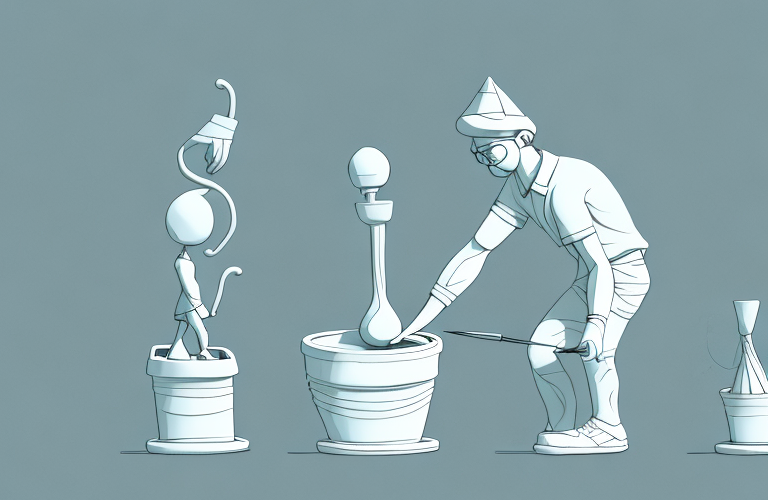
In many situations, the one thing more frustrating than working with clay is when you find it won’t stick to something. From uneven molds to decorative objects that won’t take shape, working with clay can quickly become a damp squib if you don’t make sure it will properly stick to the surface you wish to shape it on.
Why does clay not stick to certain surfaces?
Clay often does not adhere to a particular surface because that surface does not have the appropriate amount of “tooth,” or grips of its own. Clay needs to have tooth in the surface to adhere, but some surfaces are simply too polished or too wet for it to stick.
In addition, some surfaces may have a wax or oil coating that prevents the clay from adhering. This is especially true of surfaces that are meant to be non-stick, such as cookware. Clay can also be difficult to adhere to surfaces that are very smooth, such as glass or metal.
Types of Surfaces Clay Won’t Stick to
Waxed or polished metal, glass, and coated stone and wood surfaces will generally not accept clay, so you should generally avoid these at all costs. The shine left on some metal or glass surfaces diminishes the grip the clay has on it, and will often lead clay to create a puddle shape instead of the desired structure.
Other surfaces, like untreated wood and stone, may have too much grip. Wooden surfaces need to be buffed, sanded and polished for the best results when working with clay. Stones may be particularly tough, as clay can stick more due to their natural “grips” than is necessary.
When working with clay, it is important to make sure the surface is properly prepared. Sanding and polishing the surface can help to ensure that the clay will adhere properly. Additionally, it is important to make sure that the surface is clean and free of any dirt or debris that could interfere with the clay’s adhesion.
What Makes a Surface Unsuitable for Clay?
In order for clay to stick properly to a surface, it must have a certain amount of “tooth.” A surface that is too polished or too wet can inhibit this tooth; likewise, a surface that has too much grip can stop the clay’s conforming shape.
Surfaces that are too smooth, such as glass or metal, are not suitable for clay. Additionally, surfaces that are too porous, such as wood, can absorb too much moisture from the clay, making it difficult to work with. It is important to choose a surface that is neither too smooth nor too porous in order to get the best results when working with clay.
How to Prevent Clay from Sticking
When working with surfaces like metal, glass, and coated stone and wood, use certain preventative measures. Waxing and buffing these surfaces will give them the necessary degree of tooth for the clay to adhere. When working on untreated woods, be sure to sand and polish them first in order to give the clay a better chance of adhering. Lastly, lightly rubbing oil over stones has been known to encourage clay not to stick as tightly.
It is also important to make sure that the clay is not too wet when working with any of these surfaces. If the clay is too wet, it will be more likely to stick and be difficult to remove. Additionally, it is important to make sure that the surface is clean and free of any dirt or debris before applying the clay. This will help to ensure that the clay will adhere properly and not be prone to sticking.
Alternatives to Clay for Non-Stick Surfaces
If you find that you cannot use clay, look into alternative materials. Polymer clay is a good choice for non-stick surfaces because it is very forgiving; also, non-stick rubbers and plastics can be used as substitutes with great results. Additionally, certain natural stones (e.g., alabaster) can work as successful alternatives.
Other materials that can be used as non-stick surfaces include silicone, wax paper, and parchment paper. Silicone is a great choice because it is heat-resistant and can be used in the oven or microwave. Wax paper and parchment paper are also great options for baking and cooking, as they are non-stick and can be used in the oven.
Benefits of Using Clay as a Non-Stick Surface
Using clay as a non-stick surface has some distinct advantages. Along with its later ability to be reshaped, clay can also be left to air dry, giving your projects even more freedom and precision. Furthermore, compared to other materials like rubber or plastic, clay can still be manipulated easily and create organic patterns.
Tips for Working with Clay on Non-Sticky Surfaces
When working on non-stick surfaces, care must be taken in order for the clay to adhere to the surface properly. Pressing harder does not guarantee more adherence; instead, try to roll out even layers with a uniform thickness in order to get optimal results. Additionally, avoid cutting too close as this may increase potential slipping or slipping.
Finally, keep in mind that practice makes perfect when it comes to working with clay on non-stick surfaces — patience and care are essential steps in ensuring maximum success!