
Clay sculpting is a time-honored art form that has been used for centuries to create beautiful and intricate pieces of art. If you’re interested in getting started with clay sculpting, it’s important to have a good understanding of the different types of clay sculpting tools and how they’re used. In this article, we’ll take a comprehensive look at the various clay sculpting tools that are commonly used by beginners and professionals alike, and explore their names, functions, and applications.
Understanding the Different Types of Clay Sculpting Tools
Before we dive into the various clay sculpting tools themselves, let’s take a moment to understand the different types of clay sculpting tools that are available. There are generally two types of clay sculpting tools: handheld tools and power tools.
Handheld tools are typically made of metal or wood and are designed to be used by hand to shape and manipulate clay. Power tools, on the other hand, are electric or battery-powered and can be used to speed up the sculpting process, but also require a bit more experience and technique to use safely and effectively.
It’s important to note that within each type of tool, there are also different shapes and sizes that serve different purposes. For example, handheld tools can include wire tools for cutting and shaping, loop tools for carving and smoothing, and rib tools for creating texture and refining edges. Power tools can include rotary tools for carving and sanding, and extruders for creating uniform shapes and patterns.
Essential Clay Sculpting Tools for Beginners
If you’re just getting started with clay sculpting, there are a few essential tools that you’ll need to have in your toolkit. These include a wire tool for removing excess clay, a ribbon tool for cutting and shaping clay, a loop tool for scooping and carving clay, and a needle tool for adding details and texture to your sculpture.
As you become more experienced with clay sculpting, you’ll likely want to expand your toolkit to include additional tools, such as clay shaping tools for larger areas, smoothing tools for achieving fine textures, and palette knives for creating sharp edges and angles.
Another important tool to consider adding to your toolkit is a clay extruder. This tool allows you to create uniform shapes and sizes of clay, which can be useful for creating repetitive elements in your sculpture. Additionally, a set of calipers can be helpful for measuring and ensuring accuracy in your sculpting.
It’s also important to consider the type of clay you’re using and how it affects your sculpting process. Different types of clay have different properties, such as drying time and hardness, which can impact how you work with them. As you gain more experience, you may want to experiment with different types of clay to see which ones work best for your style and techniques.
Advanced Clay Sculpting Tools for Professionals
If you’re a professional sculptor or are looking to take your skills to the next level, there are a few additional clay sculpting tools that can help you achieve more complex and intricate designs. These include extruders, which can produce consistent and precise clay shapes, electric pottery wheels for rapid shaping and smoothing, and airbrushes for adding color and texture to your sculptures.
Another tool that can be useful for advanced clay sculpting is a heat gun. This tool can be used to dry and harden the clay quickly, allowing you to work on multiple layers without waiting for each layer to dry. Additionally, a set of carving tools can help you create fine details and textures on your sculptures, such as hair, wrinkles, and clothing folds.
It’s also important to have a good quality kiln for firing your sculptures. A kiln can help you achieve the desired hardness and durability of your clay sculptures, and can also be used for glazing and adding color to your pieces. Investing in a high-quality kiln can make a big difference in the final outcome of your sculptures.
Handheld Clay Sculpting Tools: A Detailed Guide
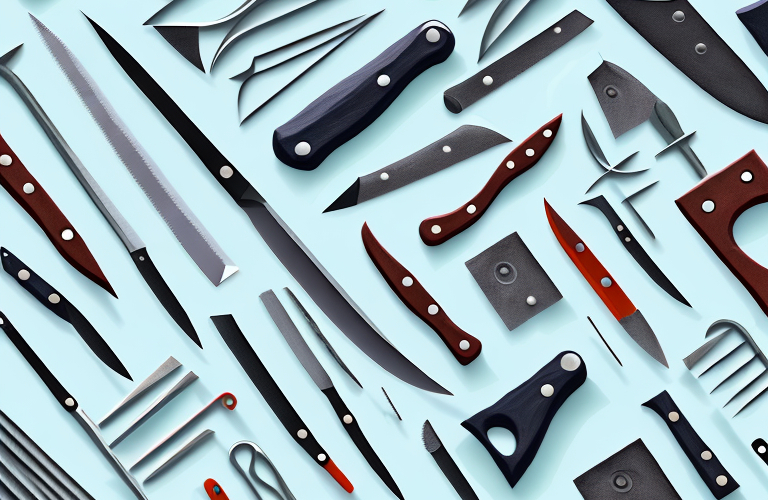
As we mentioned earlier, handheld clay sculpting tools are designed to be used by hand to shape and manipulate clay. Some of the most common handheld clay sculpting tools include wire tools, ribbon tools, loop tools, and needle tools.
Wire tools are used to remove excess clay and can come in a variety of shapes and sizes. Ribbon tools, on the other hand, are great for cutting and shaping clay, while loop tools are ideal for sculpting and carving. Needle tools, which come in a variety of sizes and shapes, are perfect for adding fine details and textures to your sculpture.
It’s important to note that when using handheld clay sculpting tools, it’s best to start with a rough shape and gradually refine it with smaller tools. It’s also helpful to keep a bowl of water nearby to keep the clay moist and pliable. Additionally, some sculptors prefer to use a combination of tools to achieve the desired effect, such as using a wire tool to remove excess clay and a loop tool to carve out intricate details.
Power Tools for Clay Sculpting: What You Need to Know
Power tools can be a bit more intimidating to use than handheld tools, but they can also be incredibly helpful for speeding up the sculpting process and achieving more precise shapes and textures. Some of the most common power tools used in clay sculpting include electric pottery wheels, which are used for shaping and smoothing clay, and airbrushes, which can add color and texture to your sculptures.
It’s important to note that power tools can be dangerous if not used properly, so make sure to read the instructions carefully and use protective gear such as goggles and gloves when necessary.
Another power tool that can be useful for clay sculpting is the Dremel rotary tool. This tool can be used for carving intricate details and creating texture on your sculptures. Additionally, a heat gun can be used to dry and harden clay quickly, allowing you to work on multiple layers or sections of your sculpture at once.
When using power tools for clay sculpting, it’s important to have a well-ventilated workspace to avoid inhaling dust or fumes. It’s also a good idea to have a designated area for your power tools and to keep them organized and easily accessible. With proper safety precautions and practice, power tools can greatly enhance your clay sculpting skills and allow you to create more complex and detailed pieces.
The Anatomy of a Clay Sculpting Tool
Whether you’re using a handheld tool or a power tool, it’s important to understand the anatomy of your tool so that you can use it effectively. Most clay sculpting tools consist of three main parts: the handle, the shank, and the blade.
The handle is the part of the tool that you hold onto and manipulate, while the shank connects the handle to the blade. The blade, which is typically made of metal or other materials, is the part of the tool that comes into contact with the clay and is used to shape and sculpt the clay into the desired form.
It’s important to note that different types of blades are used for different purposes. For example, a loop tool is used for carving and removing clay, while a wire tool is used for cutting and slicing. Additionally, some blades may have a serrated edge for creating texture or a flat edge for smoothing surfaces. Understanding the different types of blades and their uses can help you choose the right tool for the job and achieve the desired results in your clay sculpting projects.
How to Choose the Right Clay Sculpting Tool for Your Project
Choosing the right clay sculpting tool for your project will depend on a variety of factors, including the type of clay you’re using, the size and complexity of your design, and your personal skill level and preferences.
It’s important to experiment with different tools and techniques to find the ones that work best for you and your individual style. Don’t be afraid to try new things and push yourself out of your comfort zone!
Another important factor to consider when choosing a clay sculpting tool is the purpose of your project. Are you creating a small figurine or a large vase? Different tools will be better suited for different projects. For example, a wire loop tool may be ideal for creating fine details on a small sculpture, while a wooden modeling tool may be better for shaping a larger piece of clay.
Maintaining Your Clay Sculpting Tools: Tips and Tricks
Proper maintenance of your clay sculpting tools is important in order to keep them in good working condition for as long as possible. This may include cleaning your tools after each use, sharpening your blades regularly, and storing your tools in a dry and safe place when not in use.
By taking the time to properly care for your tools, you can extend their lifespan and ensure that they continue to produce beautiful and intricate sculptures for years to come.
Another important aspect of maintaining your clay sculpting tools is to avoid using them on hard or rough surfaces. This can cause the blades to become dull or even chip, which can affect the quality of your work. Instead, use a soft surface such as a piece of foam or a clay mat to work on.
It is also a good idea to invest in high-quality tools from reputable brands. While they may be more expensive, they are often made with better materials and craftsmanship, which can make a big difference in the longevity and performance of your tools.
DIY Clay Sculpting Tools: Creating Your Own Unique Set
If you’re feeling creative, you may even want to try making your own clay sculpting tools using common household items or other materials. This can be a fun and rewarding way to personalize your toolkit and experiment with new shapes and designs.
As with any DIY project, it’s important to exercise caution and follow proper safety procedures when creating your own clay sculpting tools. Always wear protective gear and work in a well-ventilated area.
With this comprehensive guide to clay sculpting tools and their names, we hope that you’re feeling inspired and ready to start sculpting your own beautiful pieces of art. Remember to start with the essentials and work your way up to more advanced tools as you become more experienced. Happy sculpting!