
Are you a creative beginner looking for the best clay for your next project? With so many types of clay available on the market, it can be a bit overwhelming trying to pick the one that will best suit your needs. In this article, we’ll explore the benefits of clay for beginners, different types of clay, the tools and supplies needed for clay projects, tips for working with clay, creative ideas for beginner clay projects, troubleshooting common clay problems and where to buy the best clay for beginners.
Benefits of Clay for Beginners
Clay is a great material to work with when starting out on your creative journey! The feel and smell of clay can be quite therapeutic and is sure to provide hours of distraction-free and mindful fun. Clay can be molded into any shape you desire and provides full freedom to explore your creativity with no limitations. It also encourages motor development, especially in young children, as they practice fine-motor skills while playing with clay. Working with clay can be an excellent way to boost self-confidence and learn new skills.
Clay is also a great way to express yourself and your emotions. You can use clay to create sculptures that represent your feelings and experiences. It can be a great way to express yourself without words and can be a great form of self-expression for those who are not comfortable expressing themselves verbally. Clay can also be used to create beautiful pieces of art that can be displayed in your home or given as gifts to friends and family.
Types of Clay for Beginners
There are many types of clay available, but when working with clay for beginners, it is important to go for one that is easy to use: air-dry clay, polymer clay or, depending on the project you have in mind, earthenware or stoneware clays. Air-dry clays are lightweight and totally non-toxic, so it’s a great option to introduce children to the wonders of working with clay. Polymer clays are great for those who want to work on intricate details in their project; it is much more pliable than air-dry clay, but it does require curing in an oven. Earthenware and stoneware clays are harder types of clay, and not recommended for beginners.
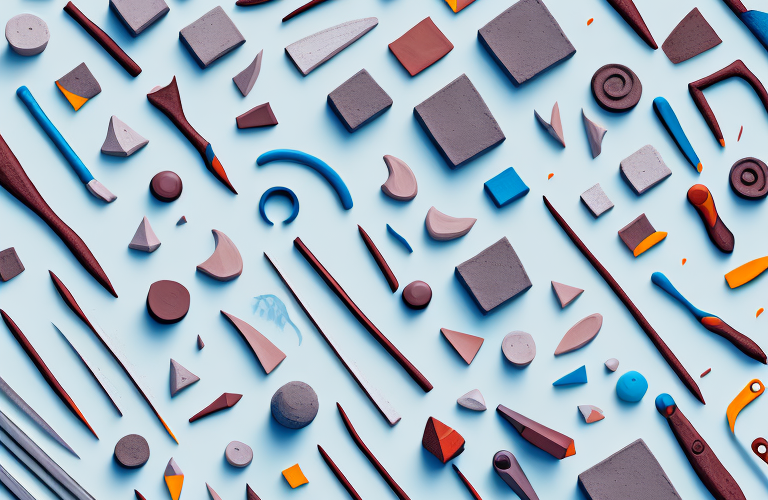
When working with clay, it is important to remember to use the right tools for the job. For air-dry clay, you will need a rolling pin, a cutting tool, and a variety of sculpting tools. For polymer clay, you will need a clay roller, a cutting tool, and a variety of sculpting tools. For earthenware and stoneware clays, you will need a pottery wheel, a variety of sculpting tools, and a kiln for firing the clay.
Tools and Supplies Needed for Clay Projects
Before you start your clay project, make sure you have the right tools and supplies. Below are some basics you should have on hand:
- Clay (of your choice)
- Clay tools (rollers, cutters, knives, etc.)
- Molds (for polymer clay projects)
- Work surface (harboard or polycaprolactone board)
- Sandpaper (or other texturing/finishing tools)
- Sealant (if using air-dry clay)
Tips for Working with Clay
When working with clay for beginners, it is important to take safety precautions such as wearing gloves or using a rolling pin instead of the hands to avoid skin contact with the clay. Avoid using a lot of water when mixing clays as this can lead to cracks and weak areas in the piece. Always remember to take breaks while working with clay as it is easy to tire with extended periods of crafting.
Creative Ideas for Beginner Clay Projects
Once you have all the necessary materials, it’s time to get creative! Here are some fun project ideas you can do with clay:
- Jewelry or accessories
- Toy figures or sculptures
- Trinket boxes
- Model landscape
- Coasters
- Garden markers
Troubleshooting Common Clay Problems
Clay can be unpredictable at times, so it is important to know what to do if you encounter any issues while working with it. For example, if your clay is too hard/crumbly you can rewet with some water and knead it until it returns to a soft, pliable consistency. If the piece cracks during drying or firing (for polymer clays), you can fix these with a bit of glue or superglue.
Where to Buy the Best Clay for Beginners
There are many places where you can purchase clay, from craft stores or online. Check out websites such as Amazon or Etsy for a wide range of options. Prices often vary depending on type and supplier, and sometimes buying in bulk is cheaper. Always read reviews and compare prices before ordering.
Conclusion
Working with clay can open up a world of creative possibilities. Whether you want to make something small and intricate or a large sculpture, there is no shortage of ideas to explore! With so many types of clay available, always make sure to research and find the best one that suits your needs. Follow these guidelines and get ready to explore your imagination!