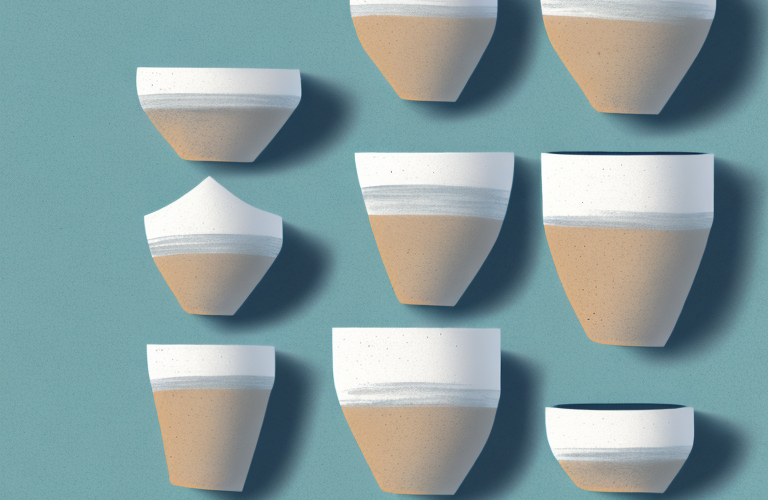
Clay bodies are essential to the ceramic arts, but what are they exactly? Clay bodies are the workhorses of ceramic art — they determine the color and shade of your project, the texture of your finished piece, and the firing temperature needed to reach your desired result. With so many different types of clay bodies available, it’s easy to become overwhelmed. This article covers the basics — from the different types of clays and their pros and cons to tips for choosing the right clay body for your art.
Types of Clay Bodies
Clay bodies are typically classified into five categories: ceramic clays, porcelain clay, stoneware clay, earthenware clay, and raku clay. Because there is such a wide variety, it is important to understand the differences between each clay body.
Ceramic Clays
Ceramic clay is a general term for the main clay used in many ceramic art and production processes. It is made of a mixture of various clays and other minerals such as sand, feldspar, and quartz. When mixed with water, it can be formed into a variety of shapes and sizes. This type of clay can also be fired in a kiln to create a wide range of ceramic items. This is usually referred to as “pottery clay”.
Porcelain Clay
Porcelain clay is a type of ceramic clay that is made up of more refined, non-porous particles. It features a finer texture than many other ceramic clays. Porcelain clay is also an incredibly dense material that can be fired at extremely high temperatures (around 2,300 degrees Fahrenheit) to create beautiful and delicate items.
Stoneware Clay
Stoneware clay is a type of ceramic clay that has been fired at temperatures high enough to cause the clay particles to compress together. As a result, stoneware clay has a unique texture that is denser and heavier than other types of clay. Stoneware clays are usually fired at temperatures between 2,100-2,400 degrees Fahrenheit.
Earthenware Clay
Earthenware clay is a type of pottery clay that traditionally contains a mixture of granite and iron oxide. Unlike stoneware and porcelain clays, earthenware is not fired as hot (only around 1,800-2,100 Fahrenheit). As a result, items created with earthenware are usually not as hard or durable as items created with other types of clays.
Raku Clays
Raku clays are a unique type of ceramic clay that is different from traditional ceramic and pottery clays. Raku clays are specifically formulated to withstand higher temperatures, allowing artists to fire their pieces in an oxygen-reduced atmosphere. As a result, many raku pieces have interesting patterns and textures that are not possible with other types of clay.
Staining Clays
Staining clays are unique in that they contain trace amounts of metal oxides that give them their distinctive coloration when fired. Common metals used in staining clays include copper, cobalt, iron, manganese, chromium, and nickel. Colors from staining clays will range from pale yellow to deep blues, purples, and black depending on the metals used.
Low-Fire Clays
Low-fire clays are typically fired at temperatures below 2,000 degrees Fahrenheit. These clays usually contain kaolin or chamotte as one of their main ingredients and are usually used to create items such as flower pots, figurines, and plaques. Low-fire clays are typically cheaper and easier to work with than other types of clays.
High-Fire Clays
High-fire clays are fired at temperatures above 2,000 degrees Fahrenheit and are usually used to create more durable items such as tiles and dinnerware. These clays have a unique texture and can withstand higher temperatures without warping or cracking. High-fire clays tend to be more expensive than low-fire clays.
Pros and Cons of Different Clay Bodies
Each type of clay body has its own pros and cons that may suit your art project better than others. Low-fire clays are less expensive and easier to work with than high-fire clays; however, low-fire clays may not be as durable or long lasting as high-fire options. Porcelain clays can be fired at much higher temperatures than other options, but these materials tend to cost more and require specialized techniques such as glazes and glazing techniques. Earthenware is great for decorative pieces because of its unique color and texture due to low firing temperatures, but it tends to be less durable than other types of clays; while raku can create interesting patterns not achievable through other methods but due to the reduction process there is a risk of the pieces becoming cracked.
Tips for Choosing the Right Clay Body for Your Art
Choosing the right clay body for your project can be overwhelming with so many different options to choose from. Here are a few tips to help guide you in making your decision: think about the type of firing temperature you need for your item; consider the texture you’re trying to achieve; choose the right clays based on their cost; and experiment with different types of clay before settling on one.
Clay bodies are essential to the ceramic arts; having knowledge about the different types available can allow you to choose the right type for your project. The three main categories are ceramic clays, porcelain clay, stoneware clay, earthenware clay, raku clays, staining clays, low-fire Clays and high-fire Clays. Knowing the pros and cons of each can help you choose the perfect clay body for your art. With these tips in mind, you can find the perfect clay body for any project!